

Research Progress
-
HMB prevents obesity via gut microbiotaRecently, a team of researchers from China Agricultural University, the Institute of Subtropical Agriculture, Chinese Academy of Sciences (ISA) conducted a study to compare and contrast the effects of different dosages of HMB on lipid metabolism in a high-fat diet (HFD)-fed mice and unravel the underlying mechanisms of HMB action of lipid metabolism.Jul 01, 2019
-
Biological Soil Crusts Modulate Soil Nitrogen Following Vegetation Restoration in Subtropical Karst RegionTo address the above uncertainties, researchers from the Institute of Subtropical Agriculture (ISA) of the Chinese Academy of Sciences measured the physical and chemical characteristics of the biocrusts and underlying soils, as well as litter properties under different vegetation restoration strategies (i.e., restoration with plantation forest, forage grass, and a combination of forest and grass, and spontaneous regeneration to natural grassland) following cropland abandonment in a subtropical karst region, southwest China.Jun 17, 2019
-
Dietary supplementation with yeast glycoprotein affected intestinal mucosal morphology, immune response and colonic microbiota in weaned pigletsResearchers from the Institute of Subtropical Agriculture (ISA) of the Chinese Academy of Sciences found that yeast glycoprotein (YG) affected growth performance, intestinal mucosal morphology, immune response and colonic microbiota in weaned piglets.Jun 08, 2019
-
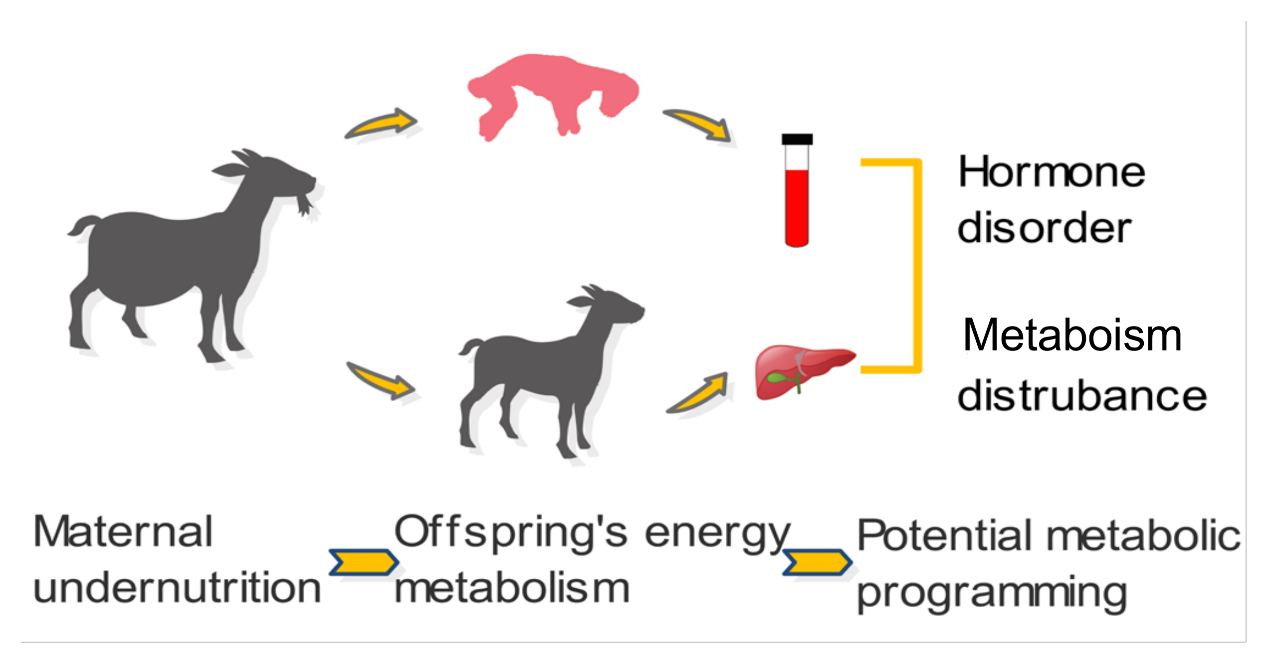 Maternal undernutrition programs fetal development and increases the risk of metabolic disorders later in lifeTAN Zhiliang’s research group the Institute of Subtropical Agriculture (ISA) of Chinese Academy of Sciences use goats as model animals to study the changes of energy metabolism, meat quality and liver immune function in offspring suffering nutritional restriction in middle gestation.May 29, 2019
 -
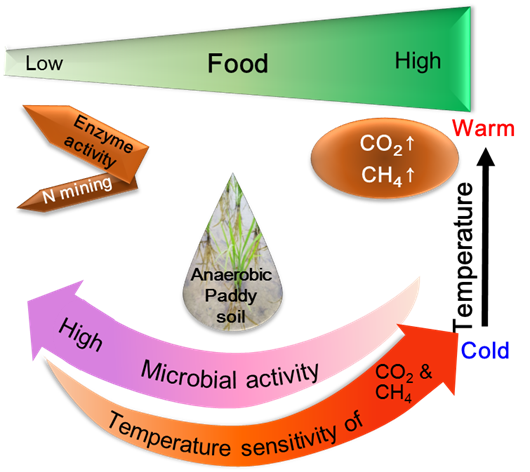 Scientists Discover Labile Carbon Matters More Than Temperature for Enzyme Activity in Paddy SoilThe research team led by Prof. WU Jinshui from the Institute of Subtropical Agriculture (ISA) of the Chinese Academy of Sciences recently reported that enzyme activities are more sensitive to C addition than to temperature in paddy soil and SOM decomposition is accelerated by both C input and warming, especially at low temperatures.May 21, 2019
 -
Evaluation of Interval between Measurements for Quantification of Enteric Methane Emissions Measured by Respiration ChamberResearchers from China Agricultural University and the Institute of Subtropical Agriculture (ISA) of the Chinese Academy of Sciences investigated the evaluation of interval between measurements and calculation method for the quantification of enteric methane emissions measured by respiration chamber.May 19, 2019
-
Can Exogenous Nitrogen Inputs Impact on Mycorrhiza in Karst Grassland?The simulated N deposition experiment (N, 100 kg N ha-1 yr-1; P, 50 kg P ha-1 yr-1; NP, 100 kg N ha-1 yr-1 + 50 kg P ha-1 yr-1) and different legume species (Amorpha fruticose vs Indigofera atropurpurea) or planting densities (1.5 × 2 vs 1 × 1 m) in the grassland were set up at the Institute of subtropical agricultural (ISA) of the Chinese Academy of Science (CAS). Researchers measured the AMF abundance and community composition, as well as soil properties.May 13, 2019
-
Nitrogen Fertilization Impact on Photosynthetic Carbon in Rice-soil SystemsBy using a multiple pulse-labelling with 13CO2 method, researchers from the Institute of Subtropical Agriculture (ISA) of Chinese Academy of Sciences have quantified the rice photosynthesis-derived C input into the rice–soil systems, and estimated the effect of N fertilization on the distribution and fates photosynthesized carbon in rice–soil systems.May 08, 2019
-
Dynamic Feeding Low and High Methionine Affects Variation of Glucose and Lipid Metabolism-related Genes in Liver of Laying HensResearchers from the Institute of Subtropical Agriculture (ISA) of the Chinese Academy of Sciences conducted a 70-day experiment to explore the effects on serum biochemistry, mRNA expression of circadian clock- and glucose and lipid metabolism-related genes in the liver of laying hens (Brown Hyline, 180 birds, 41-weeks).Apr 25, 2019
-
How Soil Types Affect Fungal nirK-Containing Communities?Researchers from the Institute of subtropical agricultural (ISA) of the Chinese Academy of Science (CAS) investigated the abundance and composition of fungal nirK-containing denitrifiers across different climate zones in China, including quaternary red clay soils(QRC), alluvial soils(AS), and black soils(BS).Apr 23, 2019
