

Research Progress
Mapping 44,000 Viruses in Ruminants: Gastrointestinal Region Trumps Host Species
A large-scale population metagenomic study has shed new light on spatial heterogeneity of viral communities across the gastrointestinal tracts of ruminant, which tightly interwoven with the history of humans.
Researchers led by Prof. Tan Zhiliang from the Institute of Subtropical Agriculture of the Chinese Academy of Sciences, revealed that the gastrointestinal tract region, rather than ruminant species, is the primary factor distinguishing viral communities.
This work was published in Journal of Advanced Research on January 6.
This study constructed the Ruminant Gastrointestinal Virome Catalog (RGVC) by integrating 373 metagenomic samples from 10 gastrointestinal regions across seven ruminant species. By combining short- and long-read sequencing, the research team identified nearly 44,000 viral operational taxonomic units (vOTUs), 89.3% of which were novel, profoundly expanding our map of the ruminant virosphere (Figure 1).
The research uncovered a defining feature of these communities: pronounced spatial heterogeneity. Viral composition is shaped primarily by the physiological gastrointestinal regions—such as the stomach, small intestine, or large intestine—rather than by the host animal species (Figure 2). This regional patterning is closely linked to the putative microbial hosts. Bioinformatic analysis revealed over 10,000 high-confidence virus-host pairs between more than 4,600 prokaryotic hosts and nearly 6,000 viruses. A strong correlation was found between the abundance of viruses and their corresponding hosts (Figure 3), indicating that differences in the local prokaryotic community are the key drivers of viral distribution.
Additionally, further analysis showed that nearly half of the viruses employ a lysogenic lifestyle, integrating their DNA into the host genome for long-term persistence, with the dominance of this strategy varying systematically along the digestive tract. These viruses also carry auxiliary metabolic genes (AMGs) involved in crucial functions like carbohydrate and energy metabolism. The distribution of these AMGs differs across gastrointestinal regions, corresponding to their localized metabolic roles. Further studies confirmed the viral origin and functional activity of these key AMGs through genomic analysis and 3D protein modeling (Figure 4).
“As the first systematic exploration of ruminant gastrointestinal viruses through the lens of spatial ecology” Prof. Wang Min, the co-corresponding author emphasized, “this work deciphers their distribution, survival strategies, and functional impacts, and enabling targeted modulation of virus-host interactions in specific gastrointestinal compartments.”
Contacted: Min Wang
E-mail: mwang@isa.ac.cn
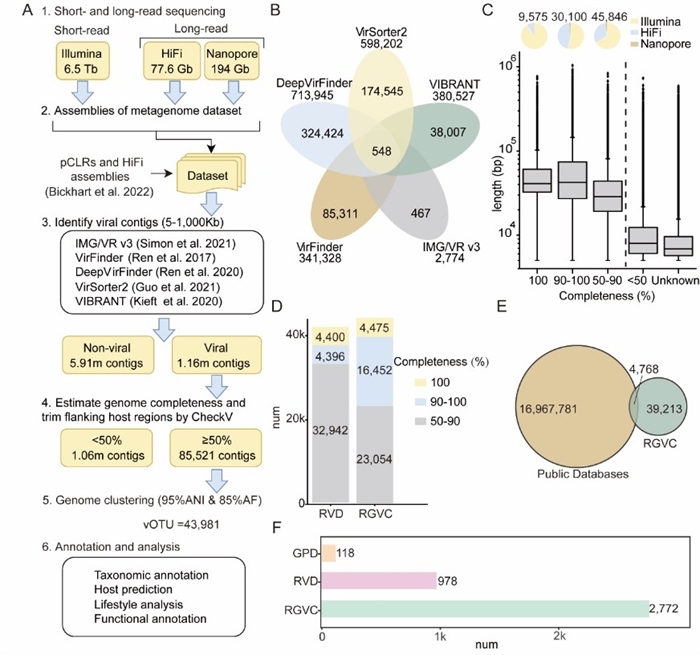
Figure 1 Construction and feature overview of the RGVC (Imaged by Shizhe Zhang)
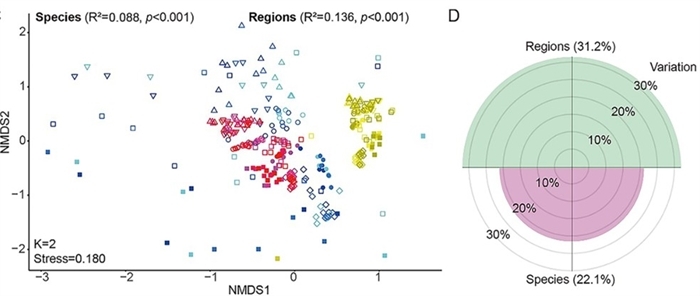
Figure 2 Viral diversity and proportion of variation explained by gastrointestinal region and ruminant species (Imaged by Shizhe Zhang)
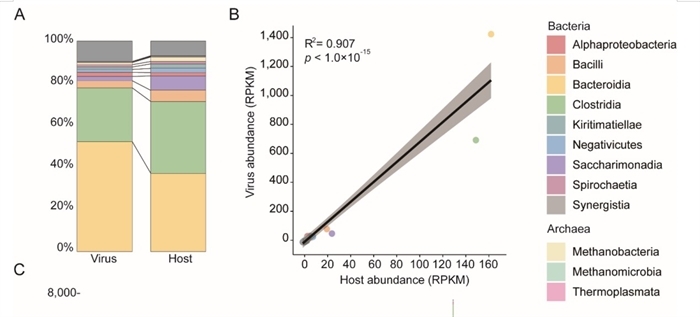
Figure 3 Dynamic correlation between viruses and their putative hosts (Imaged by Shizhe Zhang)
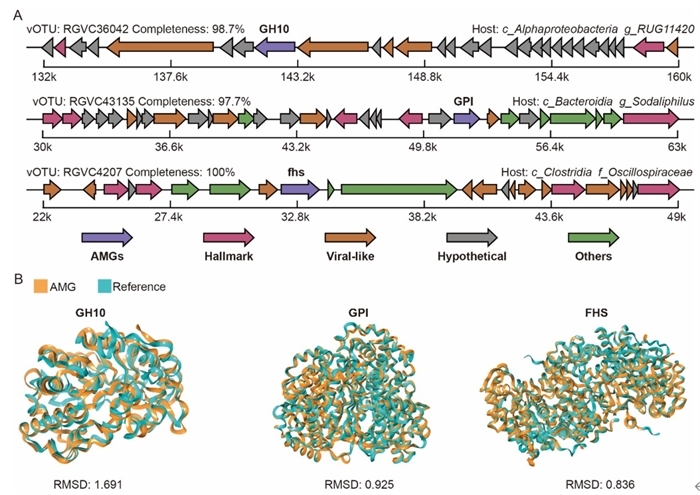
Figure 4 Genomic context and protein structure of selected virus-encoded auxiliary metabolic genes (Imaged by Shizhe Zhang)
