

Research Progress
A Step Toward Global Standards: New Framework Advances Innate Immune Assessment in Animal Health
A new study by Chinese scientists outlines a conceptual and methodological framework that could help unify how innate immune status is assessed across different studies and application scenarios.
The study, conducted by researchers from the Institute of Subtropical Agriculture, Chinese Academy of Sciences, was published in Frontiers in Immunology on March 16.
How to reliably measure the body’s first line of defense remains an open question in immunology. Despite the central role of innate immunity in protecting animals from infection, researchers worldwide still lack a consistent way to evaluate its functional status—limiting its use in disease prevention, vaccine design, and precision livestock management.
To fill this gap, the team led by Associate Prof. Feng Zemeng proposes a shift toward integrated, function-oriented evaluation, rather than focusing on individual biomarkers, which often provide fragmented and sometimes misleading signals. Their approach brings together multiple layers of biological information—ranging from inflammatory signaling and immune cell activity to metabolic regulation—offering a more comprehensive picture of how the immune system operates in real-world conditions.
This work addresses a long-standing bottleneck in the field: the lack of comparability. Current studies often rely on different indicators, sampling strategies, and analytical methods, making it difficult to interpret results consistently or translate findings into practice. By emphasizing standardized workflows and multi-parameter integration, the proposed framework provides a pathway toward more reproducible and actionable immune assessments.
Furthermore, the study also highlights the dynamic nature of immune responses. Factors such as nutrition, environmental stress, and physiological rhythms can all influence immune readouts, underscoring the need for evaluation systems that move beyond static measurements.
The researchers hypothesized that future advances, particularly the integration of artificial intelligence and multi-omics technologies, could enable adaptive models capable of tracking immune status over time.
By reframing innate immune assessment as a systems-level challenge, this study not only offers practical guidance for researchers and practitioners but also lays the groundwork for establishing internationally comparable standards.
“Such progress is expected to support more precise health management strategies in animal production and contribute to global efforts in disease control and sustainable agriculture,” said Feng Zemeng of ISA.
Contact: FENG Zemeng
E-mail: fengzemeng@isa.ac.cn
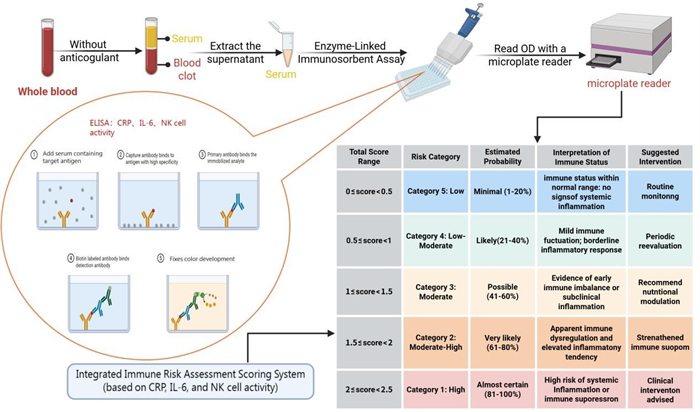
Figure1 Immune Status Assessment System Comprising CRP, IL-6 and NK Cells (Image by FENG Zemeng)
