

Research Progress
From "Local" Gut Barrier to "Systemic" Liver Protection, New Research
Metabolic dysfunction-associated steatotic liver disease (MASLD) has quietly escalated into a global silent epidemic, affecting over a quarter of the world's population. As scientists search for ways to halt its progression from simple fatty liver to irreversible liver cancer, attention has turned to the "Gut-Liver Nexus"—the biological highway connecting our digestive tract to our metabolic engine.
A research team led by Prof. TAN Zhiliang from the Institute of Subtropical Agriculture (ISA) of the Chinese Academy of Sciences (CAS), associated with other international researchers, provides a comprehensive blueprint for harnessing the gut bacterium Akkermansia muciniphila (AKK) as a next-generation probiotic to treat chronic liver diseases.
The study was published in Cell Press Blue on May 28.
"Previously, we discovered how AKK acts as a microscopic bricklayer in the gut." Prof. Tan introduced, "It demonstrated that AKK strengthens the intestinal mucosal barrier by stimulating Mucin 2 synthesis in goblet cells, effectively blocking toxic endotoxins (LPS) from escaping the gut."
After years of systematic research, integrating with global clinical data, they mapped out how this single bacterium exerts multi-dimensional, systemic protection across the entire spectrum of fatty liver disease through four core pathways:
Firstly, Plugging the "Leaky Gut": AKK secretes specific key proteins (such as Amuc_1100 and Amuc_1409) that tighten cellular junctions and prompt gut stem cells to renew the protective mucus layer, cutting off the leakage of inflammatory molecules into the bloodstream.
Secondly, Calming the Liver's Immune Storm: Once AKK-derived vesicles travel through the portal vein to the liver, they coax the liver's resident immune cells (Kupffer cells) into a healing "M2" state, dampening chronic inflammation and preventing tissue scarring (fibrosis).
Thirdly, Rewiring Metabolic Networks: Through a process of "microbial teamwork," AKK reshapes the gut's bile acid profile. This chemical signal travels to the liver, turning off genes that produce fat (SREBP-1c) while switching on genes that burn fat, thereby directly relieving liver lipid toxicity.
Lastly, Paving the Way for Precision Medicine: AKK is not a "one-size-fits-all" remedy. Its clinical efficacy depends heavily on a patient's baseline gut microbiome. A transition from blind probiotic supplementation to AI-driven, biomarker-guided personalized therapies is advocated.
"Our future research is pivoting toward the use of advanced Organ-on-a-chip technology," said Dr. LIU Yong, the first author of the paper, "By cultivating human cells on biomimetic microchips that simulate the gut-liver axis, we can observe the direct 'cross-kingdom crosstalk' between functional bacteria and host tissues in real-time."
This cutting-edge approach will bypass the limitations of traditional animal models, allowing the team to screen therapeutic bacterial targets with unprecedented human relevance and speed, paving the way for highly precise microecological therapies for obesity and metabolic liver diseases.
Contacted: LIU Yong
E-mail: y.liu@isa.ac.cn
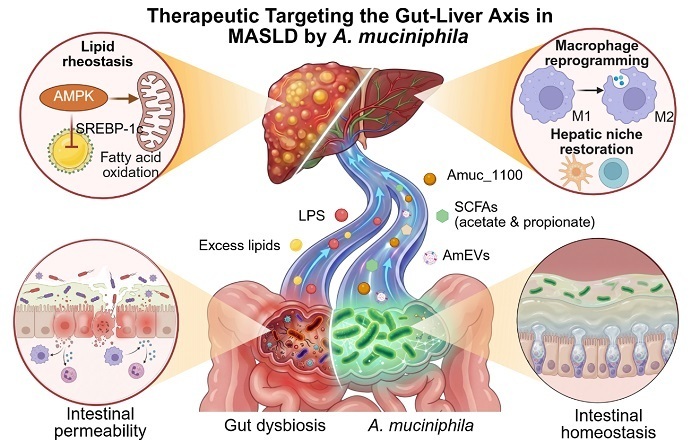
Figure 1. Akkermansia muciniphila reshapes hepatic immune and metabolic traits(Imagd by LIU Yong)
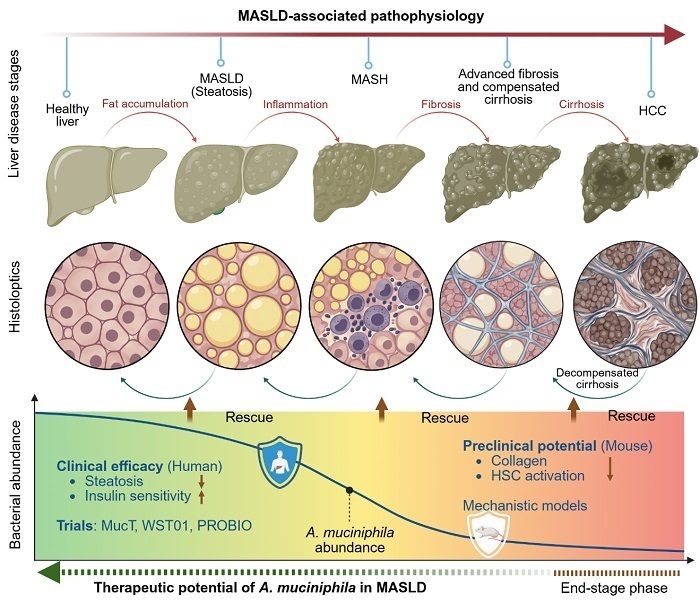
Figure 2. Pathophysiological progression of MASLD and the stage-dependent therapeutic landscape of Akkermansia muciniphila(Imagd by LIU Yong)
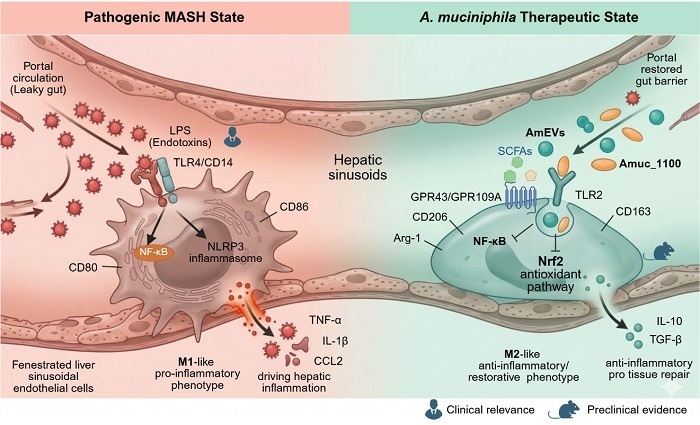
Figure 3. Akkermansia muciniphila repolarizes hepatic Kupfer cells to ameliorate MASH-related inflammation(Imagd by LIU Yong)
