

Research Progress
-
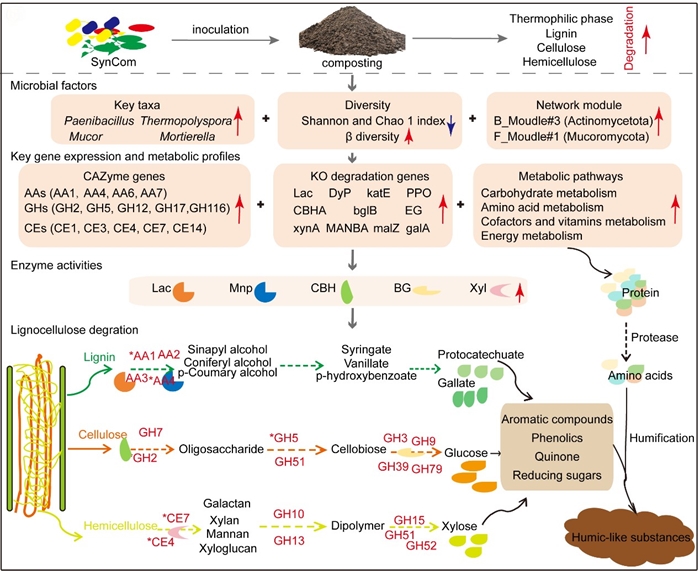 Synthetic Microbial Communities Greatly Promote Compost Material Transformation and Crop Growth, New AdvanceIn their latest three studies, a research team led by Professor Li Dejun from the Institute of Subtropical Agriculture, Chinese Academy of Sciences, has made significant progress in the field of synthetic microbial communities (SynCom) in enhancing lignocellulose degradation, promoting compost material transformation and crop growth.Jul 18, 2025
 -
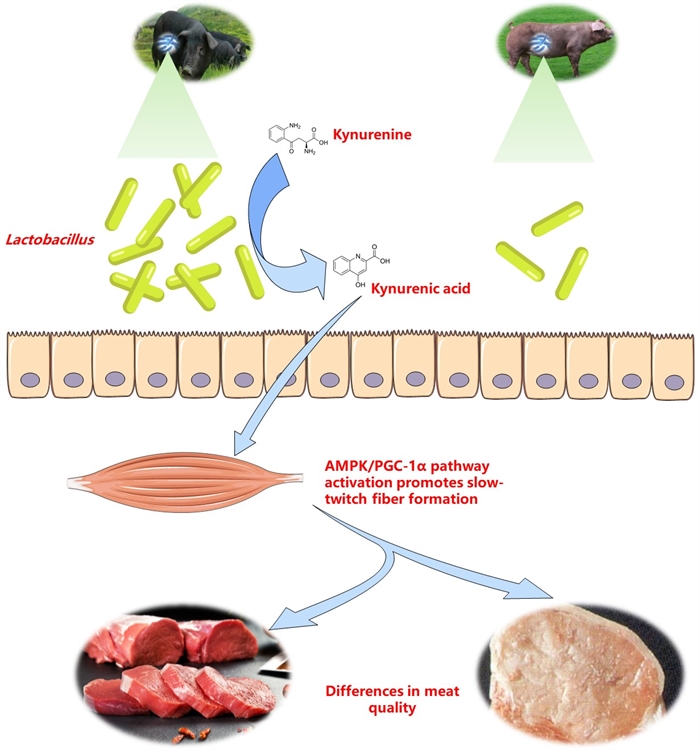 Gut Microbiota Contributes to Better Pork QualityRecently, a research team led by Prof. Kong Xiangfeng from the Institute of Subtropical Agriculture, Chinese Academy of Sciences, has revealed that modulating gut microbiota offers an approach to improve commercial pork quality—potentially bridging the gap between the high meat yield of commercial pigs and the premium meat quality of Chinese indigenous pigs.Jun 26, 2025
 -
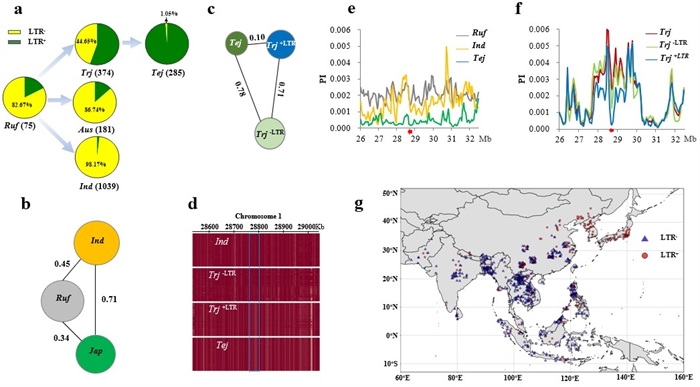 The HAN2/OsABCB5 Regulatory Mechanism Unlocks Chilling Tolerance Secrets in Japonica RiceIn a new study published in Nature Communication, a team led by Prof. Mao Donghai from the Institute of Subtropical Agriculture of Chinese Academy of Sciences elucidated the molecular mechanism by which the auxin efflux transporter HAN2/OsABCB5 regulates chilling tolerance in rice through the auxin signaling pathway.May 31, 2025
 -
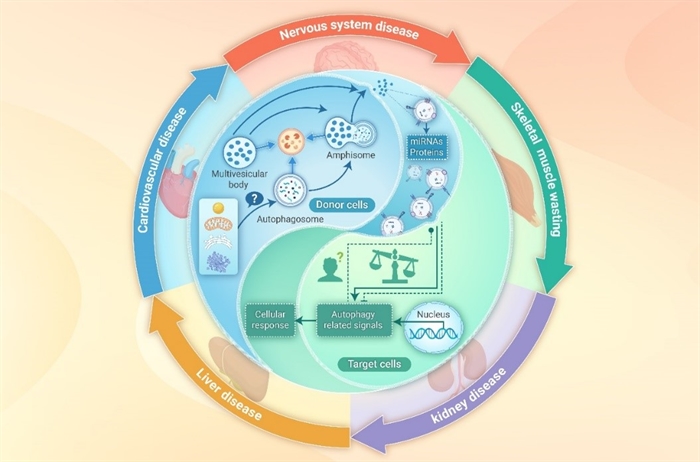 The Crosstalk Between Exosomes and Autophagy, A Cutting-edge ReviewHigh-quality pork products have become a key goal for swine industry. Intramuscular fat content and muscle fiber type composition are critical factors influencing meat quality. As important metabolic and secretory organs, muscle and adipose tissues interact with each other, and exosomes, as mediators of intercellular communication, have become a major focus of research. Recently, a research team led by Academician Yulong Yin, was invited to publish a cutting-edge review entitled "Intracellular and intercellular crosstalk between exosomes and autophagy" in the international journal The Innovation Life, where it was also selected as the cover.May 13, 2025
 -
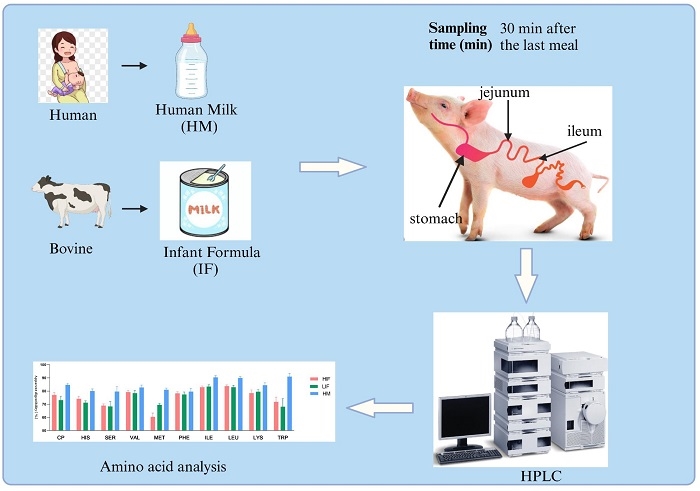 New progress in piglet modeling for evaluation of infant and young children's dairy protein nutrition researchAs an ideal model for human intestinal research, the pig, whose intestinal anatomy, enzyme system development and nutritional metabolism characteristics are very similar to those of infants and young children, has been widely used in recent years to evaluate infant formula and milk protein function research.Apr 16, 2025
 -
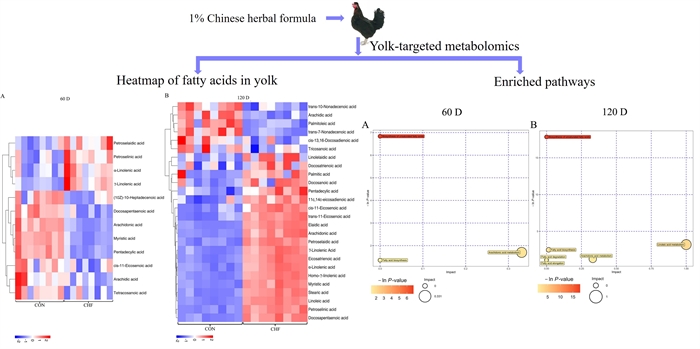 Chinese Herbal Formula Ultra-fine Powder Enhances Egg and Meat Quality in Aged Laying HensRecently, a research team led by Prof. Kong Xiangfeng from the Institute of Subtropical Agriculture, Chinese Academy of Sciences, has revealed the mechanisms of dietary Chinese herbal formula ultra-fine powder (CHFUP) for improving egg and meat quality of aged laying hens.Apr 16, 2025
 -
 How Rock Outcrops Affect Soil Functions in Mountain EcosystemsIn a recent study published in Functional Ecology on 31 March 2025, researchers led by Prof. WANG Kelin from the Institute of Subtropical Agriculture of the Chinese Academy of Sciences shed light on how the size and proximity of rock outcrops influence soil functions in these mountain ecosystems. The research team conducted a field study in mountainous karst regions of southwest China, a landscape characterized by numerous prominent rock outcrops. A total of 31 rock outcrops of varying sizes were selected and categorized into five diameter classes: 0-1 m, 1-2 m, 2-3 m, 3-4 m, and 4-5 m (FIGURE 1a). Plant litter and soil samples were collected at two distances (0-20 cm and 20-50 cm) (FIGURE 1b). Soil functions were assessed in five aspects, including nutrient provisioning, microbial growth efficiency, soil organic matter decomposition, nutrient cycling, and plant-microbe symbiosis.Apr 02, 2025
 -
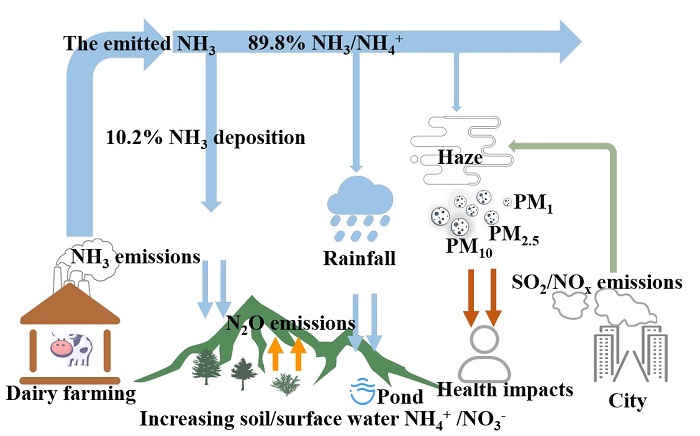 Intensive Animal farms Amplify Atmospheric Nitrogen Deposition and Aerosol PollutionA recent study led by Prof. Jianlin Shen from the Institute of Subtropical Agriculture, Chinese Academy of Sciences, has revealed the significant environmental impacts of ammonia emissions from intensive dairy farms on atmospheric nitrogen deposition and aerosol pollution. The findings, published in the prestigious journal Agriculture, Ecosystems & Environment (2025), provide critical insights into mitigating air pollution and ecosystem eutrophication caused by intensive animal farming.Apr 02, 2025
 -
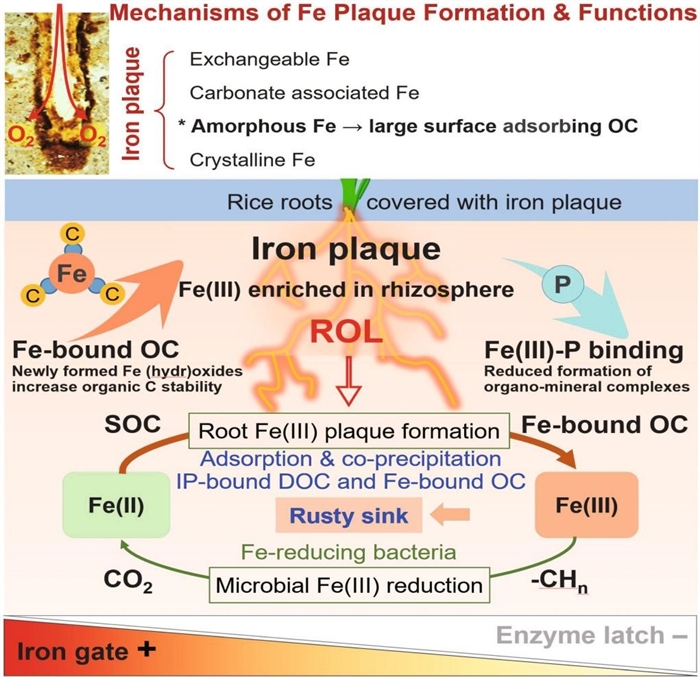 Researchers Reveal Iron-Carbon Coupling Mechanisms for Enhancing Carbon Sequestration in Paddy SoilsA research team led by Prof. Wu Jinshui from the Institute of Subtropical Agriculture, Chinese Academy of Sciences has decoded the intricate iron-carbon interactions governing soil organic carbon (SOC) stability, unveiling novel strategies to amplify agricultural carbon sequestration.Mar 31, 2025
 -
 snRNA-Seq and Spatial Transcriptome Reveal Muscle-Adipose Tissue Crosstalk in Porcine Skeletal MuscleA new study led by Prof. Yin Yulong from the Institute of Subtropical Agriculture, Chinese Academy of Sciences, conducted integrated snRNA-seq and spatial transcriptome analysis of the longissimus dorsi (LD) muscle between TB and Duroc pigs at 180 days, which revealed a discrepancy in the expression profile between TB and Duroc pigs with cellular heterogeneity and spatial specificity. This study, published in Journal of Cachexia, Sarcopenia and Muscle on March 13, highlights important contribution to metabolic regulation of interaction between various cell populations in skeletal muscle and provides potential secretory genes to be diagnostic and intervention targets for metabolic diseases in humans and meat quality in pigs. Guo Liu serves as the first author of this paper, while Prof. Li Fengna and Yin Yulong are the corresponding authors.Mar 16, 2025
