

Research Progress
-
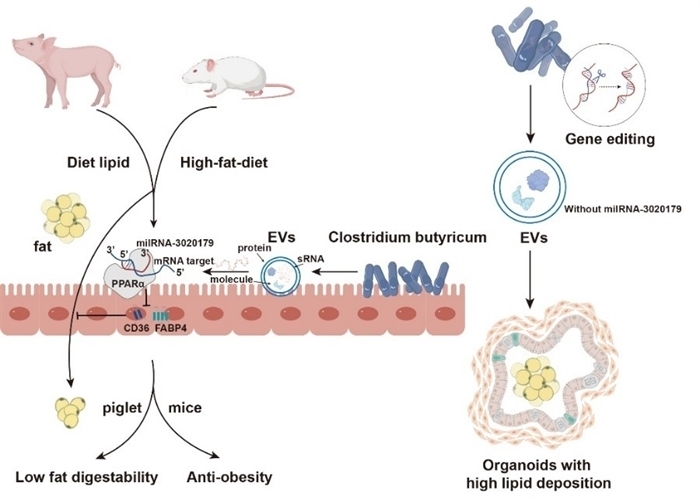 Gut Microbiota-Derived Extracellular Vesicles Modulate Piglets Lipid MetabolismA research team by Academician YIN Yulong from the Institute of Subtropical Agriculture (ISA) Chinese Academy of Sciences (CAS) reveals a new role of gut microbiota-derived extracellular vesicles in lipid metabolism.Oct 09, 2026
 -
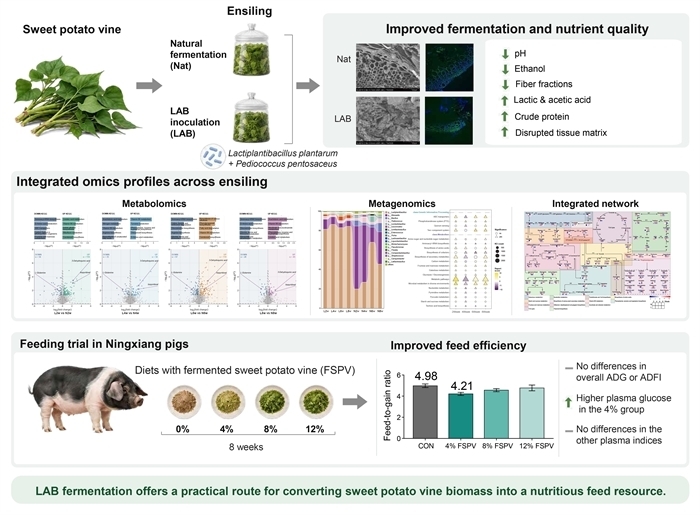 Bacterial Fermentation Turn Sweet Potato Vines into a Feed ResourceA research team led by Prof. KONG Xiangfeng from the Institute of Subtropical Agriculture, Chinese Academy of Sciences (CAS), collaborating with researcher from the Institute of Microbiology of CAS, found that fermentation with a mixture of lactic acid bacteria can improve the preservation and nutritional characteristics of SPV, and a moderate proportion of the fermented SPV can improve feed efficiency in pigs, highlighting its potential for converting agricultural byproducts into feed resources.Sep 30, 2026
 -
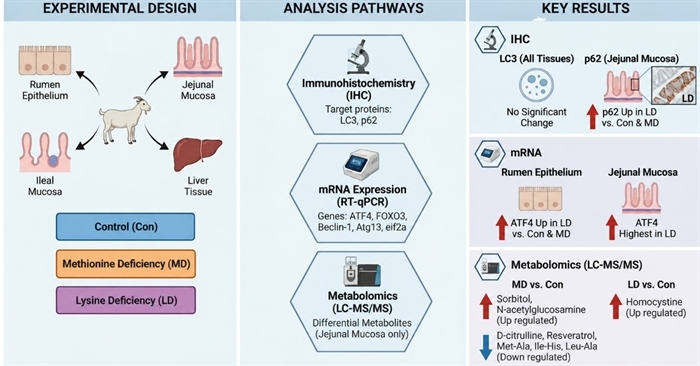 Dietary Methionine and Lysine Deficiency Triggers Divergent Regulation of Autophagy and Metabolism in GoatsAs the two primary limiting essential amino acids for ruminants, methionine and lysine greatly affect growth performance and nutrient metabolism. Dietary amino acid imbalance and deficiency are common problems in ruminant breeding production, easily causing growth retardation, intestinal metabolic disorder and reduced feeding efficiency.Sep 15, 2026
 -
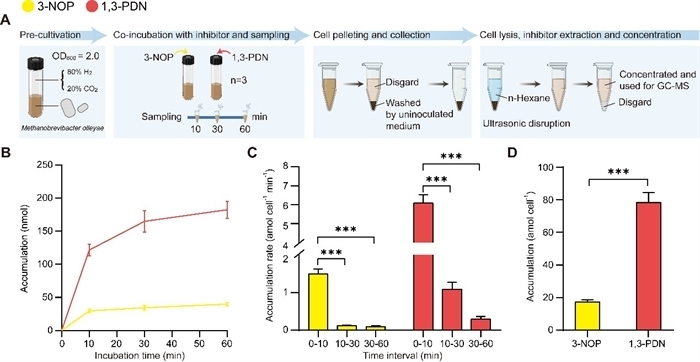 Development and mechanistic insights into a hydrophobic rumen-targeted methane inhibitor, 1,3-PDNResearchers led by Prof. Wang Min at the Institute of Subtropical Agriculture, Chinese Academy of Sciences, have revealed the mechanism of 1,3-propanediol dinitrate (1,3-PDN), a hydrophobic, rumen-targeted methane (CH4) inhibitor. The findings were recently published in The ISME Journal recently.Aug 25, 2026
 -
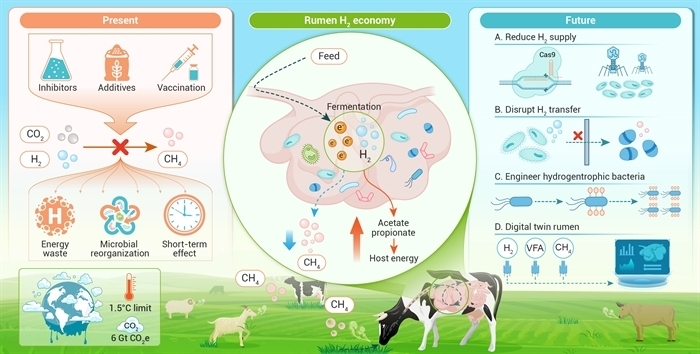 Rewiring the Rumen Hydrogen Economy: A New Strategy for Methane Mitigation and Sustainable Livestock ProductionIn a study published in The Innovation on August 6, a research team led by Prof. TAN Zhiliang from the Institute of Subtropical Agriculture, Chinese Academy of Sciences, has now advanced a new conceptual framework that shifts the focus from methane reduction alone toward optimizing hydrogen utilization within the rumen ecosystem.Aug 23, 2026
 -
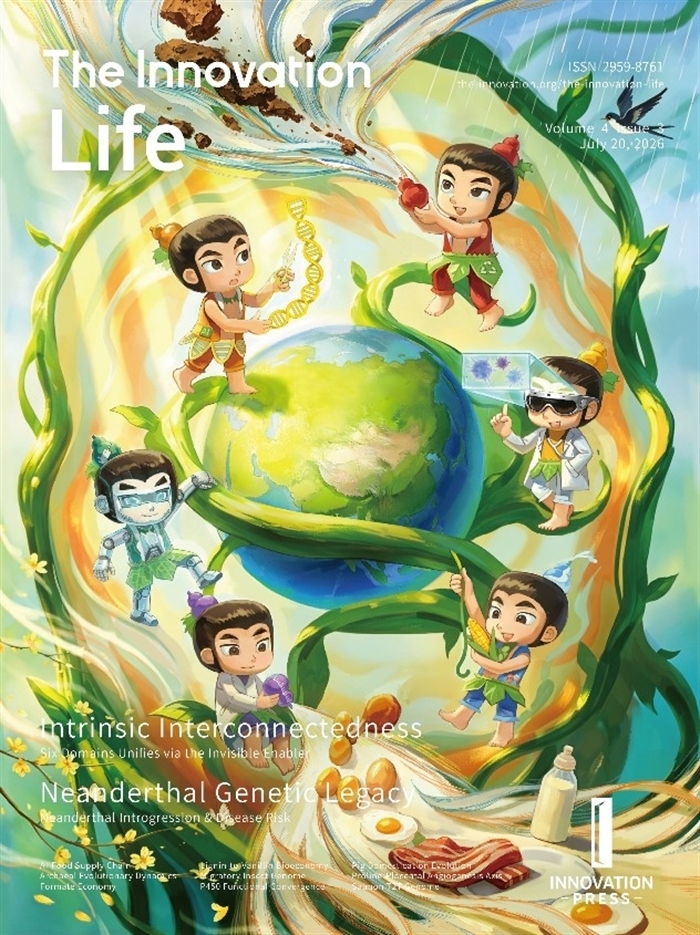 Global Food Security: A Systematic Project Involving Transdisciplinary IntegrationA new comprehensive review published on July 20, in The Innovation Life, presents a whole‑industry‑chain perspective, arguing that sustainable animal agriculture requires not piecemeal improvements but integrated, cross‑scale solutions.Jul 21, 2026
 -
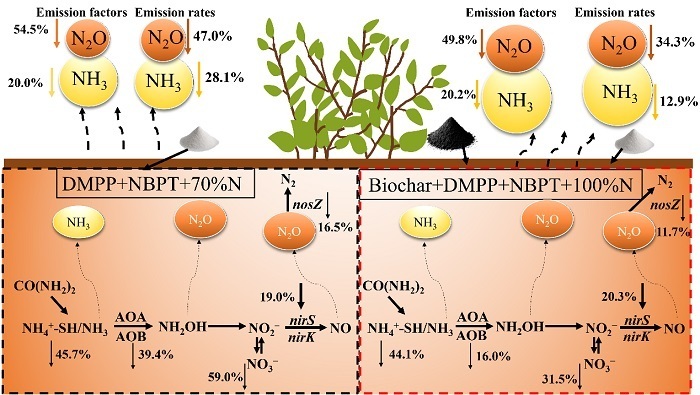 New Strategy for Reducing Nitrogen Losses and Sustaining Tea Production in the SubtropicsA team led by Prof. SHEN Jianlin from the Institute of Subtropical Agriculture (ISA) Chinese Academy of Sciences (CAS), provides a new strategy for addressing nitrogen pollution in intensively managed tea plantations.Jun 29, 2026
 -
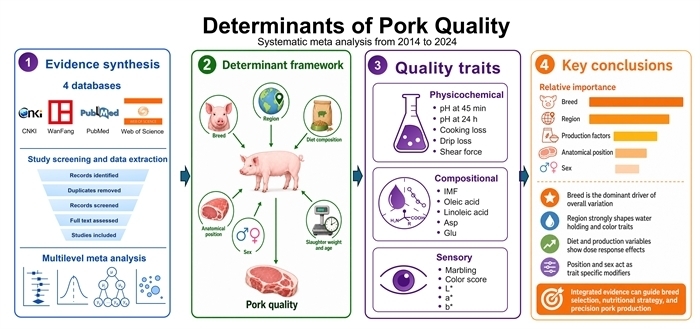 Researcher Identifies Key Determinants of Pork QualityA recent study published in Food Research International conducted a systematic meta-analysis to clarify how genetic, regional, slaughter-related, and nutritional factors shape pork quality. These findings support pork-quality improvement through coordinated breeding, region-adapted management, optimized slaughter decisions, and precision nutrition.Jun 24, 2026
 -
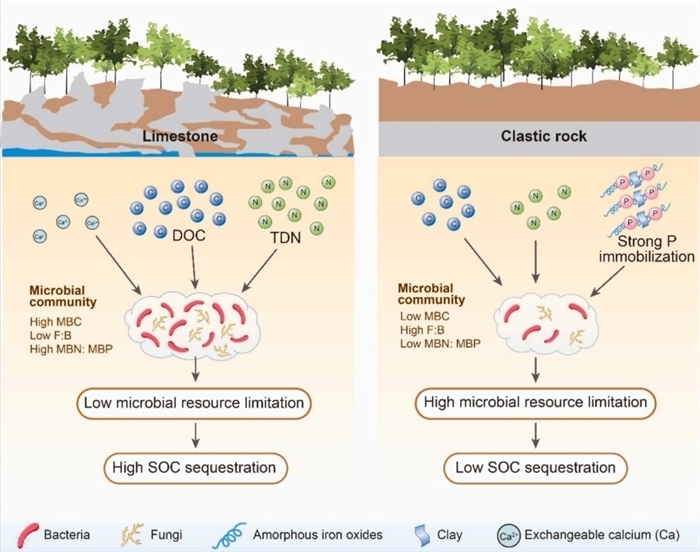 Lithological Controls on Soil Microbial Resource Limitation in Subtropical Forests of Southwest China, New ResearchIn a new research published in Catena, a team led by Prof. LI Dejun from the Institute of Subtropical Agriculture, Chinese Academy of Sciences, revealed that lithology, rather than climate, governs microbial resource limitation through soil geochemistry and microbial traits.Jun 23, 2026
 -
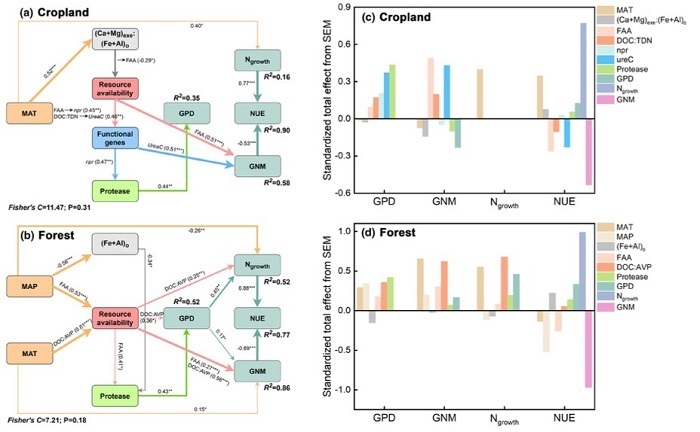 Land Use Practices: Predominantly Factors Impact Soil Nitrogen TransformationIn a study published in Functional Ecology on June 1, research team led by Pro. LI Dejun from the Institute of Subtropical Agriculture, Chinese Academy of Sciences, first revealed that land use type is the dominant factor regulating the climate responsiveness of soil organic nitrogen (SON) transformation. These findings provide critical insights into the mechanisms underlying land-type-specific nitrogen management strategies and global change modeling.Jun 10, 2026
