

Research Progress
-
Ecological Restoration Projects Show Varying Effectiveness on Long-term Vegetation Dynamics in the Karst Regions of Southwest ChinaResearchers from the Institute of Subtropical Agriculture, Chinese Academy of Sciences (ISA) and University of Copenhagen combined long-term satellite and statistical data to evaluate the efforts of ERPs on vegetation dynamics across Southwest China in recent decades. Moreover, the project effectiveness (i.e. the relation of invested money and observed efforts) was assessed.Feb 14, 2017
-
Anammox Bacterial Abundance, Activity, and Contribution in Constructed Wetland Treating Swine WastewaterResearchers in the Institute of Subtropical Agriculture, Chinese Academy of Sciences (ISA) employ quantitative PCR assay, 15N-stable isotope tracing technique, and 16S rRNA clone library to document the distribution, diversity and roles of anammox bacteria in sediments of CWs treating high strength SW.Feb 08, 2017
-
Lysine Containing Peptides, a Novel Source of Lysine for AnimalsProf. YIN Yulong's group in the Institute of Subtropical Agricultural, Chinese Academy of Sciences (ISA) focused on amino acid nutrition for many years and found that dietary lysine restriction impaired intestinal absorption and metabolism.Feb 08, 2017
-
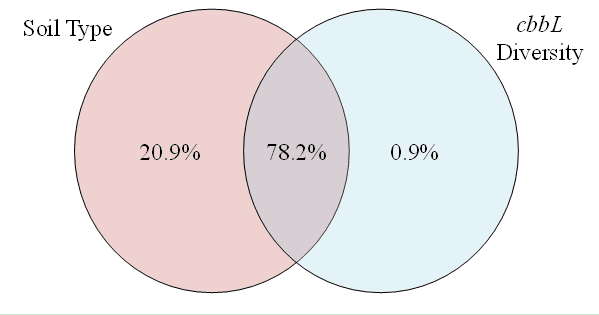 Comparison of Soil Carbon Fixation Rates and Autotrophic Population in Three Natural Ecosystems in Chinathe research group from the Institute of Subtropical Agriculture, Chinese Academy of Sciences (ISA) performed continuous labeling of three typical natural soil types (Wetland, Grassland and Forest) with 14C-CO2 for 15 days. They hypothesized that the physiological strategies for autotrophic microbial growth in these soils vary depending on biogeochemical factors. After 15 days of continuous labeling, the researchers measured the amount of labeled C incorporated into the microbial biomass in these soils. They also evaluated the diversity and abundance of CO2-fixing and CO-oxidizing bacteria by molecular analysis of cbbL and coxL genes, and used this information to estimate the genetic potential of microbial carbon fixation in each ecosystem. They also examined soil physicochemical properties to identify key factors shaping the microbial diversity in these soils.Dec 02, 2016
 -
Moderately Restricted Protein Diets Promote Muscle Protein SynthesisRecently, a team of researchers from China Agricultural University, the Institute of Subtropical Agriculture, Chinese Academy of Sciences (ISA) conducted a study to investigate the effects of reduced dietary protein levels on protein metabolism and muscle growth, and the mechanisms underlying muscle protein deposition and myofiber development of the pigs.Nov 15, 2016
-
A Temporal Stability Analysis of Surface Soil Water Content on Two Karst Hillslopes in Southwest ChinaA team in the Institute of Subtropical Agriculture, Chinese Academy of Sciences (ISA) used the temporal stability analysis to upscale point-scale measurements to represent mean areal SWC on two typical karst hillslopes.Nov 15, 2016
-
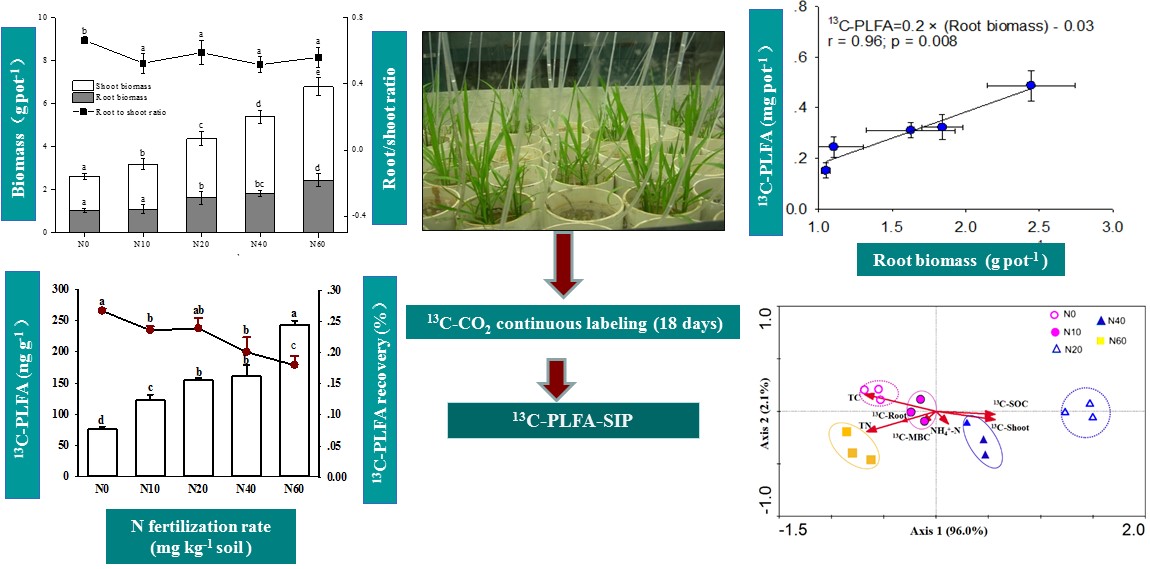 Belowground C Allocation by Rice and Turnover of Organic Matter Pools and Microbial Groups Depending on Nitrogen Levelthe research group from the Institute of Subtropical Agriculture, Chinese Academy of Sciences (ISA) performed 13C-CO2 continuous labeling (18 days) of rice plants grown in a paddy system under a range of N fertilization rates during the rice vegetative growth period (including the entire tillering stage. They hypothesized that first N fertilization increases total plant biomass and, as a result, increases belowground C allocation through the release of C from rice roots into the soil, second, rhizodeposit-C utilization by microbial groups depends on N fertilization because N availability affects microbial community structure and rhizodeposit composition, and third rhizodeposited-C in paddy soils is used mainly by bacteria because rice over-flooding and oxygen limitation negatively affects fungi.Nov 11, 2016
 -
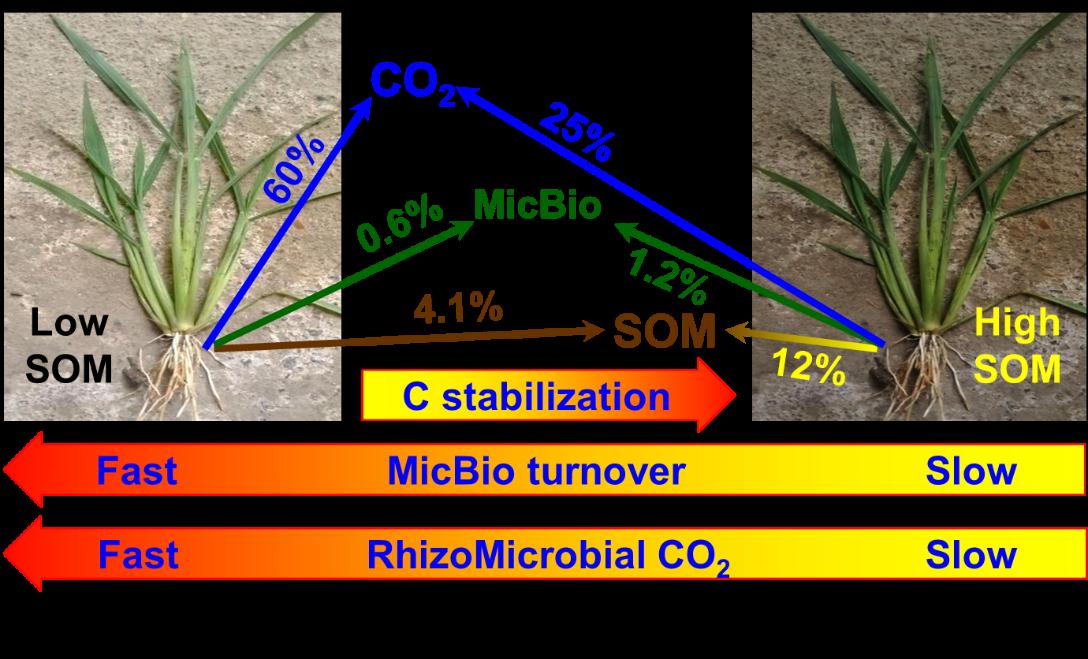 Photosynthetic Carbon Allocation and Dynamics in Rice-soil System Varies in Different Soil Organic Carbon: Matthew Effectthe research group from the Institute of Subtropical Agriculture, Chinese Academy of Sciences (ISA) studied the effects of SOC contents on the allocation and dynamics of assimilates by labeling rice with 13CO2 at the rapid root growth stage (tillering stage) and harvested 6 times within 30 days under controlled laboratory condition. The objectives of this study were to determine the allocation and dynamics of new assimilates among pools within the rice-soil systems, and evaluate amounts of C transferred by rice belowground and rhizodeposition under a series of three paddy soils differing widely in SOC content.Nov 11, 2016
 -
Ileal Bacteria Undergoes Gradual Changes Across Animal Development in Grazing GoatsResearchers in the Institute of Subtropical Agriculture, Chinese Academy of Sciences (ISA) employed high-throughput sequencing of 16S rRNA, chemical analysis of volatile fatty acids and fiber-degrading enzyme activities, and statistical techniques to explore age-related changes in ileal bacterial community for grazing goats and their potential roles in host fermentation capacity.Oct 25, 2016
-
Dietary Protein Levels: is Taking the More the Better?a team of researchers from China Agricultural University and the Institute of Subtropical Agriculture, Chinese Academy of Sciences (ISA) together conducted a study to investigate the effects of reduced dietary protein levels on the free amino acid profile and mRNA expression of the selected amino acid transceptors in different fiber type of skeletal muscle (longissimus dorsi, psoas major, biceps femoris) of growing pigs.Oct 25, 2016
