

Research Progress
-
Farming Practices of Napiergrass Field Influence Soil Hydrologic Functionsresearchers in the Institute of Subtropical Agriculture, Chinese Academy of Sciences (ISA) investigated the effects of napiergrass (Pennisetum hydridum) management on soil hydraulic properties using an orthogonal experiment.Mar 31, 2016
-
Maternal Chitosan Oligosaccharide Supplementation Affects Expression of Circadian Clock Genes and Hepatic Cholesterol Accumulation in Suckling PigletsIn the paper in BIOLOGICAL RHYTHM RESEARCH, researchers from the Institute of Subtropical Agriculture, Chinese Academy of Sciences (ISA) used real-time PCR and Western Blot methods to clarify the expression of major circadian clock genes in the liver, and possible association with hepatic cholesterol accumulation in suckling piglets.Mar 22, 2016
-
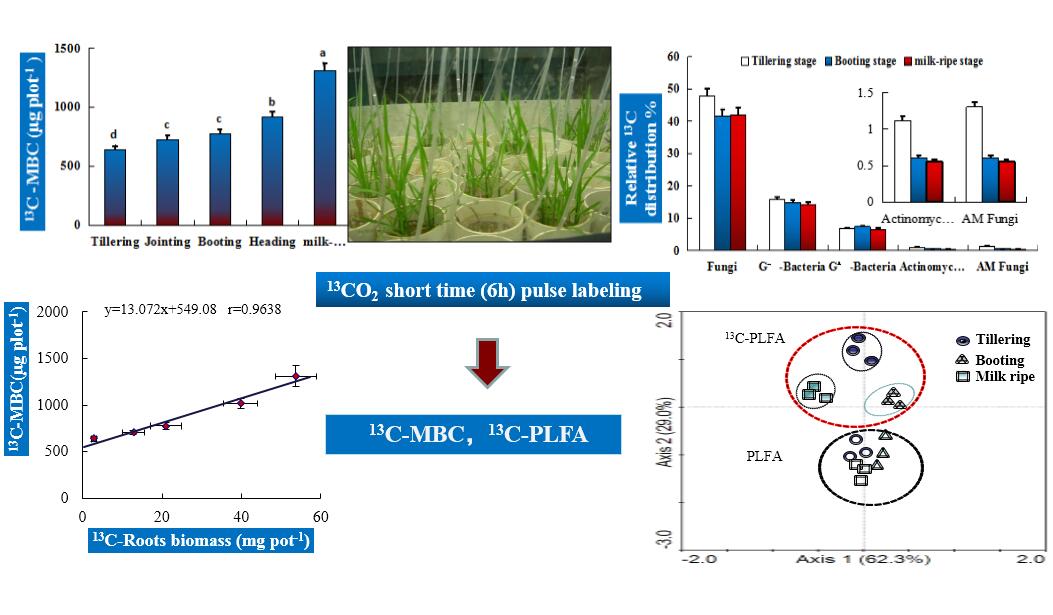 First Step of Root Exudate Utilization by Rhizosphere Microorganisms Revealed by 13C Labeling of Ricethe research group from the Institute of Subtropical Agriculture, Chinese Academy of Sciences (ISA) performed 13C pulse-chase labeling of wetland rice at five growth stages under field conditions. They tested two hypotheses: 1) root exudates and their microbial utilization changes during plant growth, and 2) rhizosphere bacteria outcompete fungi for initial uptake of root exudates because the reduced oxygen conditions have a repressive effect on fungi. We performed 6 hours of 13C pulse-chase labeling of wetland rice at five growth stages (active root growth (21 days after transplanting), rapid shoot growth (37 and 45 days after transplanting), and rapid reproduction (53 and 63 days after transplanting)) under field conditions. To test the first hypothesis, the pattern of 13C photosynthate distribution to shoot, roots, total soil organic matter, and microbial biomass were measured different stages of rice growth.Mar 07, 2016
 -
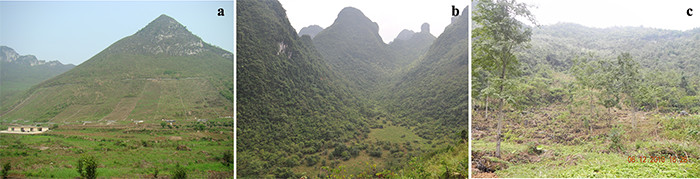 Soil Erosion Rates in Karst Peak-cluster Depression Basins of Northwest Guangxi, ChinaIn a paper in Geomorphology, researchers in the Institute of Subtropical Agriculture, Chinese Academy of Sciences (ISA) revised Universal Soil Loss Equation (RUSLE) to estimate the annual soil erosion rates on hillslopes and compared them with 137Cs budget in the depressions at two typical karst peak-cluster depression basins (named GZ1 and GZ2 basin).Mar 04, 2016
 -
Nitrogen Removal in Myriophyllum Aquaticum Mesocosm for Swine Wastewater TreatmentIn recent years, environmental pollution problems caused by swine production have created substantial concern in China.Swine wastewater is characterized by high levels of ammonia nitrogen (NH4+-N), suspended solids (SS), and chemical oxygen demand (COD). Using a N mass balance method, researchers from the Institute of Subtropical Agriculture, Chinese Academy of Sciences (ISA) investigated nitrogen removal processesMar 02, 2016
-
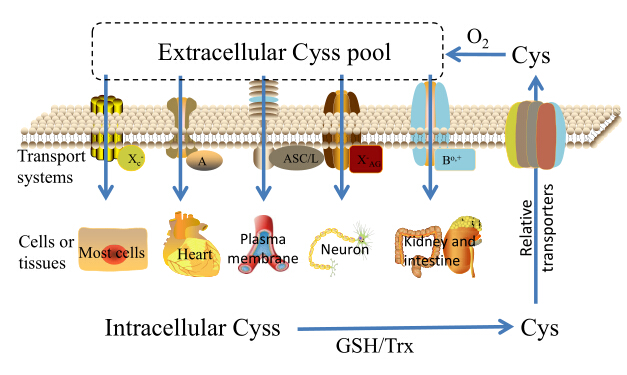 L-Cysteine: Physiological and Nutritional Function in Host Healtha research team led by Prof. YIN Yulong, from Institute of Subtropical Agriculture, Chinese Academy of Sciences (ISA) has reviewed the metabolic pathways of L-cysteine catabolism to GSH, H2S, and taurine, and corresponding nutritional implications in host health. L-cysteine is a nutritionally semi-essential amino acid.Mar 01, 2016
 -
Effects of Nitrogen Deposition on Carbon Cycle in Chinese Terrestrial Ecosystems Through a Meta-analysisResearchers in the South China Botanical Garden, Chinese Academy of Sciences (SCBG), Institute of Subtropical Agriculture, Chinese Academy of Sciences (ISA), Institute of Geographical Sciences and Natural Resources Research, Chinese Academy of Sciences (IGSNRR), University of Copenhagen, Institute of Botany, Chinese Academy of Sciences (IB) and Sino-Danish Center for Education and Research used a meta-analysis technique to compile 88 studies to synthesize the N deposition impacts on C dynamics in Chinese terrestrial ecosystems.Feb 28, 2016
-
Migratory Waterbirds Significantly Influenced by Coastal Habitat Changes in Yangtze River EstuaryResearchers in the Institute of Subtropical Agriculture, Chinese Academy of Sciences (ISA) employ remote sensing, geographic information systems (GIS) and statistical techniques to analyze the relationship between waterbird population dynamics and the changes in their habitats within the past decades in the Chongming Dongtan wetlands in the lower reaches of the Yangtze River. The team found that natural and artificial wetlands were both important to migratory waterbirds during the peak of migration and wintering, and waterbird populations were significantly correlated with their habitat changes both in natural and artificial wetlands.Feb 28, 2016
-
Whether the Biomasses of Soil Nematode Genera Can be Used as Weighting Factors for the Calculation of Nematode Community IndicesNo methodology has been developed to re-assess the cp scale and weighting system of nematodes. A team of researchers in the Institute of Subtropical Agriculture, Chinese Academy of Sciences (ISA) employed three data sets to calculate the indices using guild-based weighting and genus-based weighting.Feb 28, 2016
-
Whether There are General Patterns in Biomass Partitioning in Relation to Environmental Variation When Stand Biomass is ConsideredUsing forest biomass data from 1022 sites across China, including 110 sites at which performed field measurements from 2011 to 2012, and 912 sites from the national forest inventory data set (2004-2008), researchers from the Institute of Subtropical Agriculture, Chinese Academy of Sciences (ISA) investigated the biogeographic patterns of biomass allocation in leaves, stems, and roots based on a large-scale biomass survey across forest communities in China.Feb 28, 2016
